

How To Install Linux On Windows 8.1
Introduction
One of the nigh talked about topics of the last year has been the Windows 8 debacle and how it is now much more difficult to install Linux considering of the UEFI secure kick system.
I accept just obtained my first laptop that contains Windows viii and therefore my first laptop with UEFI and secure boot enabled.
A review of Ubuntu 14.04
Earlier you lot start it might exist worth reading the latest review of Ubuntu 14.04 to make sure dual booting with Windows viii.1 is something yous desire to do.
The hardware
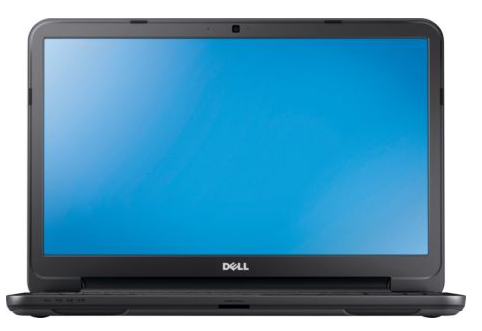
The hardware that I used to compile this guide is the Dell Inspiron 3521 laptop which you can option up for around £400 at Argos.
The Dell Inspiron 3521 has 6 gigabytes of RAM, an Intel core I3 processor, a one terabyte difficult-drive and a 15.one inch display.
Strategy
The bodily strategy for installing Ubuntu alongside Windows eight isn't much unlike to installing Ubuntu aslope Windows 7, Vista or even XP. There are but a couple of extra hurdles forth the mode.
- Fill-in your Windows partitions
- Shrink the Windows sectionalization
- Create a bootable USB bulldoze with Ubuntu on it
- Plow off fast kicking and Disable secure boot
- Run the Ubuntu installer
- Sectionalisation the empty infinite (created later shrinking Windows partitioning)
- Complete the installation
- Reboot into the Ubuntu Live image
- Run the boot repair
- Examination that everything works.
1. Fill-in your Windows partition
This is the near important step in the whole process, particularly if yous harbour any hopes of booting into Windows once more should the worst happen.
It used to be the example that when yous bought a computer you received a set of disks or a CD that had a rescue image on it. If the estimator failed all you had to practise was insert the disks or the CD and your computer would be restored as if information technology had just been delivered.
Estimator manufacturers then took the step of creating rescue partitions on difficult drives simply now some have even stopped doing that. Even if your computer manufacturer did take the stride of creating a rescue segmentation, because y'all are going to be messing around with the partition editor it would be a great thought to make sure you have recovery media that isn't in any way connected to the hard drive that y'all are partitioning.
Regardless of restoring to factory settings you volition want to back up all those pictures, videos and all those songs y'all downloaded from iTunes.
Practise not skip this step unless you lot take recovery media
As I am using a Dell I have ii methods available to me to create recovery media and I am going to document both of them hither. The chances are that the manufacturer of your computer has also provided software for creating recovery media. Information technology is worth spending the time looking at the options available to you.
Y'all should backup your computer anyway
Whether you intend to follow through with this guide or not and whether you lot make up one's mind Linux is or isn't for you lot I cannot stress enough the importance of creating recovery media.
If you nonetheless do not believe me virtually how hard it is to become the recovery media after the event go to Google (who aren't in whatever way evil) and try searching for recovering Windows viii on a Dell, HP, Toshiba etc. Yous will probably cease up paying for support.
Create recovery media using Dell'southward recovery tools
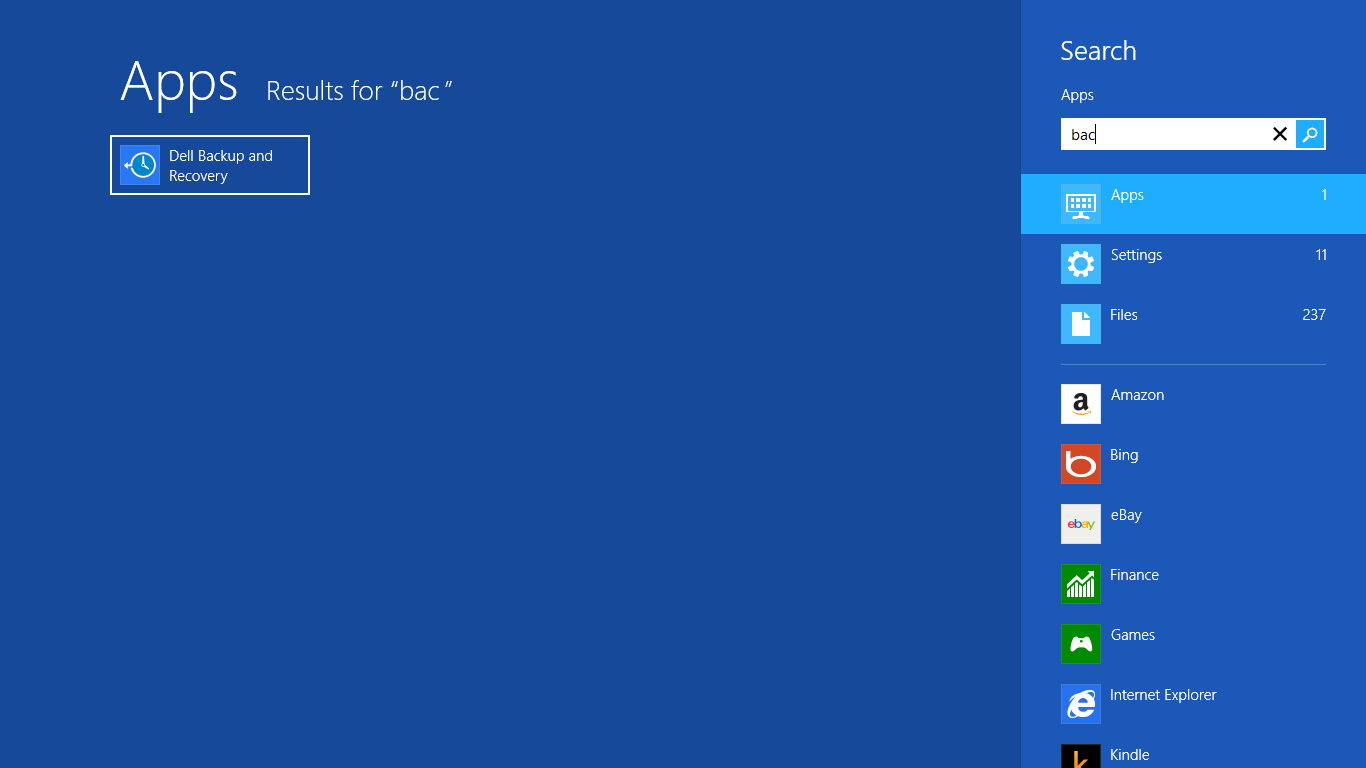
To open the Dell Backup and Recovery software move your mouse to the top right corner within Windows 8 and this will bring up the search icon.
Click on the search icon and start typing "backup". The "Dell Fill-in and Recovery" software will exist the merely pick listed.
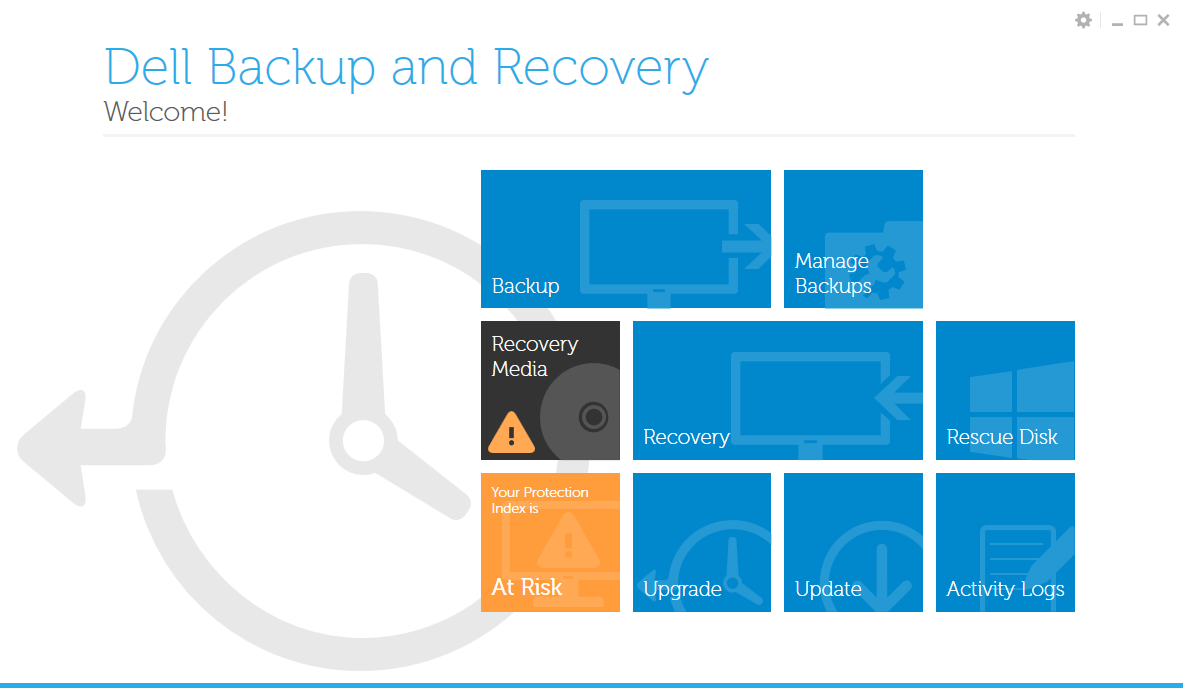
As you can see there is a large exclamation marking next to "Recovery Media". This icon appeared because at that point in time I had not created whatever recovery disks meaning that should the worst happen I was on my own.
If yous see a large exclamation mark and a big orangish status message saying "At Risk" it seems prudent to do something about that.
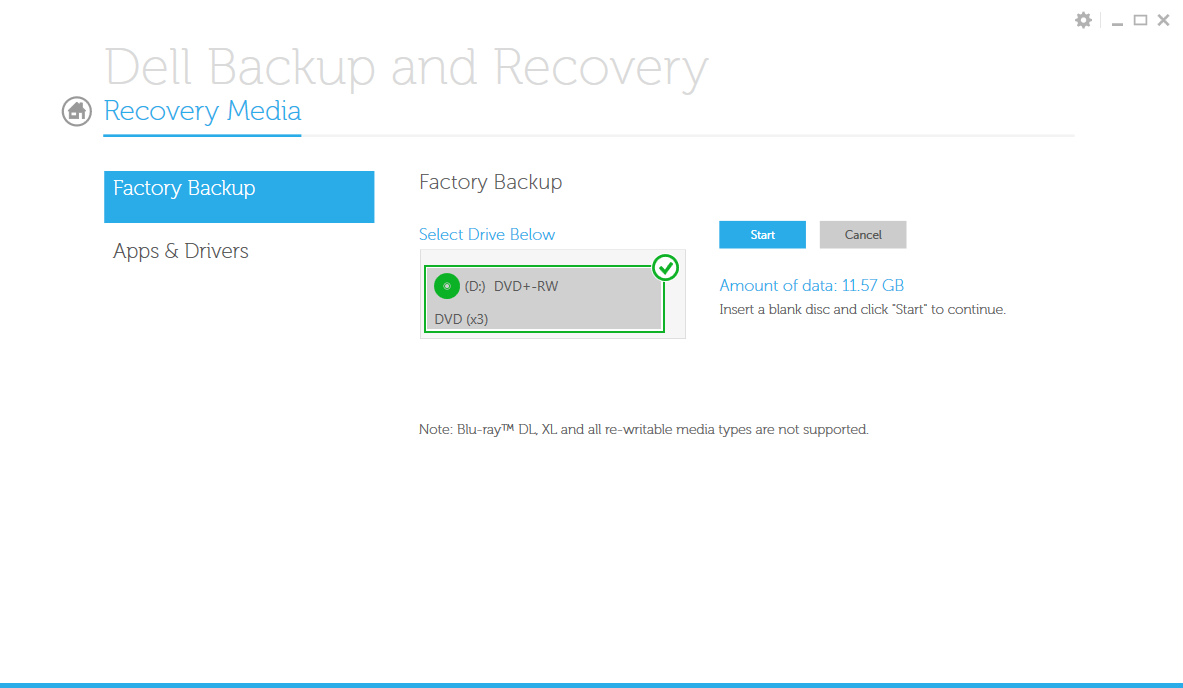
Clicking on the "Recovery Media" selection displays the screen above. You lot have 2 options:
- Factory Backup
- Apps & Drivers
You tin can also decide the location to backup to. You tin can cull either DVDs or a USB drive.
If you are smart y'all will do both. Run the "Recovery Media" option in one case and fill-in to DVDs so run it again and backup to USB. Imagine you backed up to DVDs and and then decided to restore from them later on on. DVDs have a habit of getting scratched and by and large speaking you will need 2 or 3 DVDs which ways there is more adventure of a failure. Backing up to USB as well every bit DVD means yous have hedged your bets.
You lot could of form but back up to USB just USB drives accept the habit of getting lost or re-used for another purpose when you realise you lot need to transfer information from signal A to point B.
Now I volition signal out that this process only backs upward the Windows 8 system files in gild to become Windows eight back in the issue of a failure. This does not backup all your pictures, documents and videos etc. I will come to that later on.
All you need to do to backup to DVD is insert the showtime disc and then press "Starting time". It takes a while to perform this process merely information technology is definitely worth it. Just let information technology happen, go and become a coffee and lookout man a bit of boob tube. Check back occasionally though because you lot will need to swap discs.
In one case y'all have finished bankroll up to DVD repeat the procedure but backup to USB.
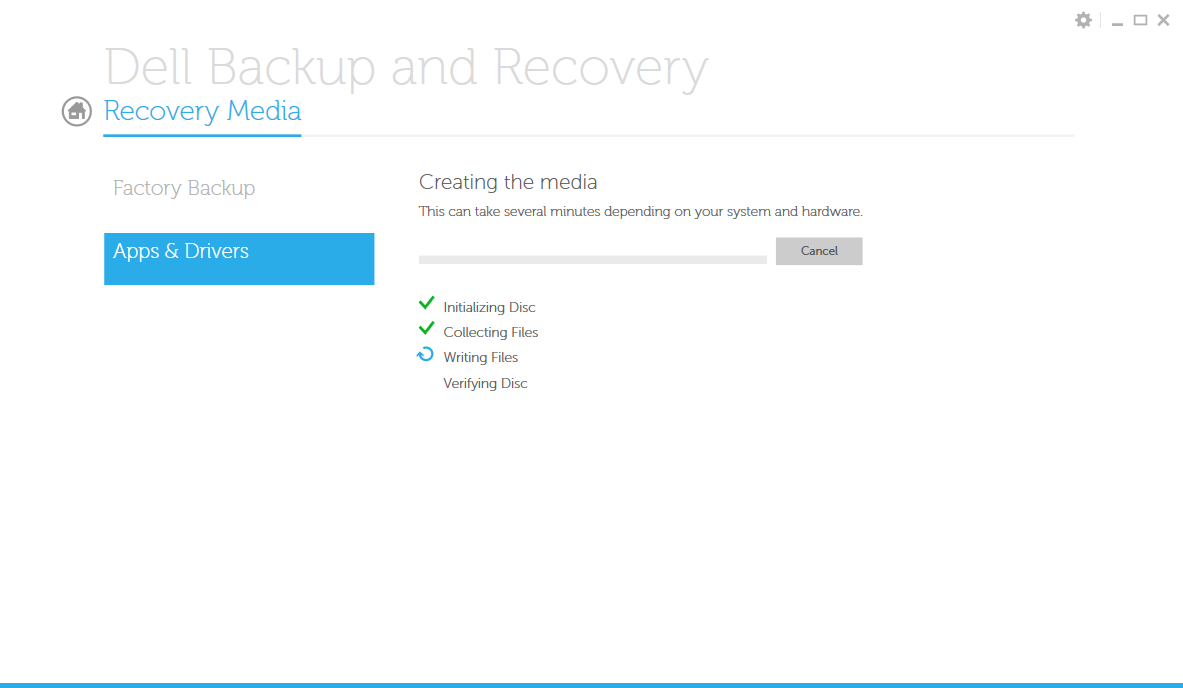
Later on running the "Mill Backup" click on the "Apps & Drivers". Now insert a blank DVD and click "Beginning". Once more the process will take a lilliputian while but at to the lowest degree you lot will have a backup of all the applications that were installed when you bought the calculator.
Creating recovery media using Window's vii tools
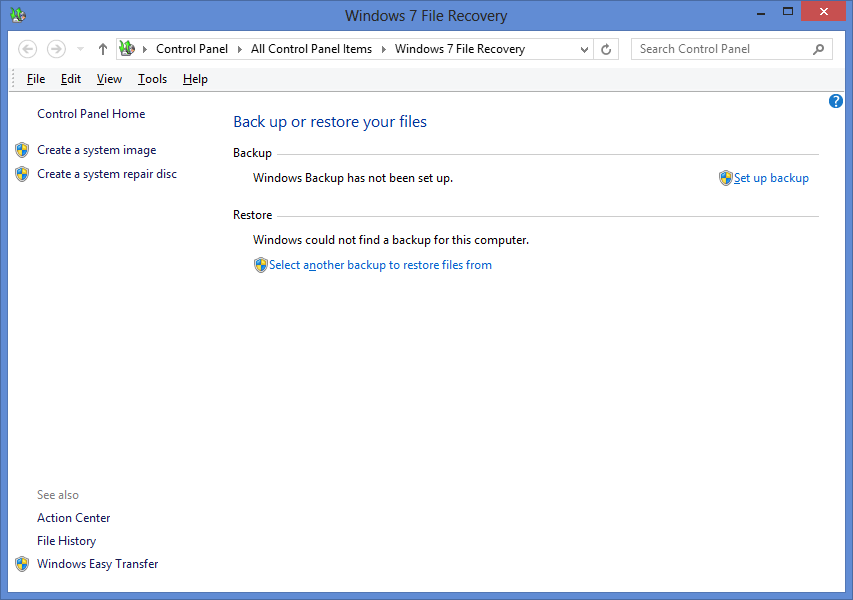
Now the first backup department was a little bit specific to Dell computers. Allowing for the fact that you may not be using a Dell estimator this section shows how to create a system image using the Windows 7 File Recovery tools. (I wonder why I couldn't find a Windows 8 one?).
To get to the Windows 7 recovery tools move the mouse to the meridian correct corner and then select the search icon again.
Click on the "settings" option and then blazon "recovery". The choice for "Windows vii Recovery" will appear. Clicking on this option will display the above window.
There are 2 options here:
- Create a system repair disc
- Create a system image
The system repair disc will boot into Windows recovery mode. Cull this option first and insert a blank DVD and so create the repair disc.
The system image takes a copy of all the selected partitions and therefore you tin restore your computer to the state it is in at the moment the backup is taken which means all your documents, pictures and videos etc will be safely backed upward as well. (You lot can schedule a organization image backup at regular intervals so that yous get regular backups).
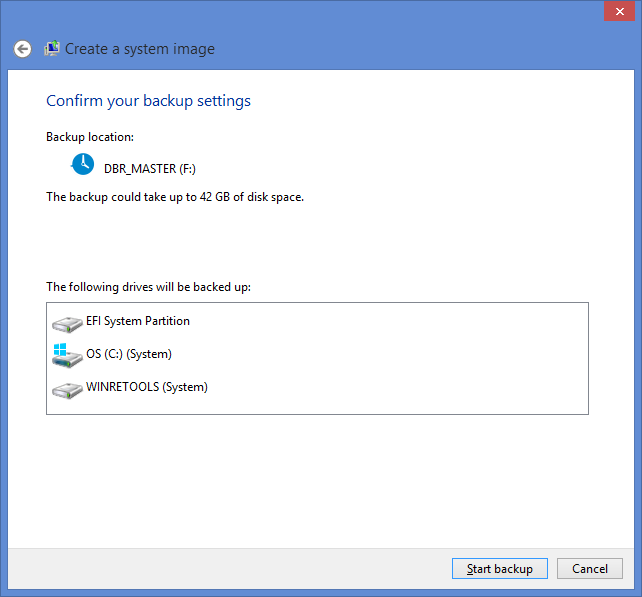
When you create the image you will be shown the backup location where the image volition exist saved and the partitions that volition be backed up.
Now I highly recommend using external storage for this purpose.
An external difficult drive is great for this sort of thing but be careful. I have had external drives that corrupted the image due to the nature of pulling out the USB cable earlier it was fix.
(Yes I am aware that was a dumb affair to do)
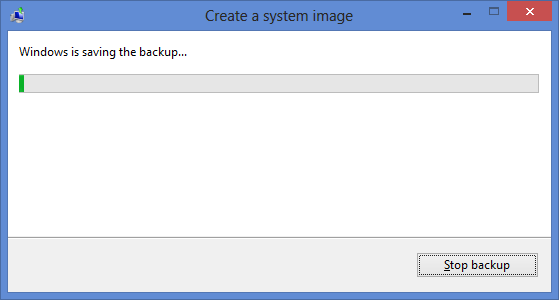
Afterwards clicking "Start Backup" the usual random green progress bar starts.
Nosotros are all aware at this indicate that you have to wait an indeterminate menses of betwixt v minutes and four years for the green bar to achieve the end and fifty-fifty when information technology does there is no guarantee it is the end of the process.
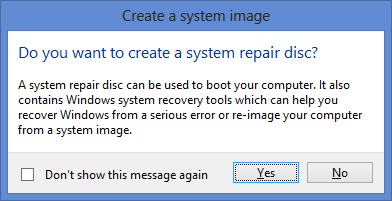
When you lot have finished creating the system image you are asked in one case once more if you want to create a system repair disc.
I don't want to sound like your mum but you really should do this.
ii. Shrink the Windows partition
Windows is like an infestation of cockroaches. Cockroaches will keep filling up space until it runs out and volition effort and find some more than space. Windows is built to believe that all the available disk infinite belongs to it and therefore there is no spare infinite for some other operating system.
To go effectually this issue there is a tool available within Windows that lets you compress the Windows partitioning (or indeed any other partitioning on the deejay).
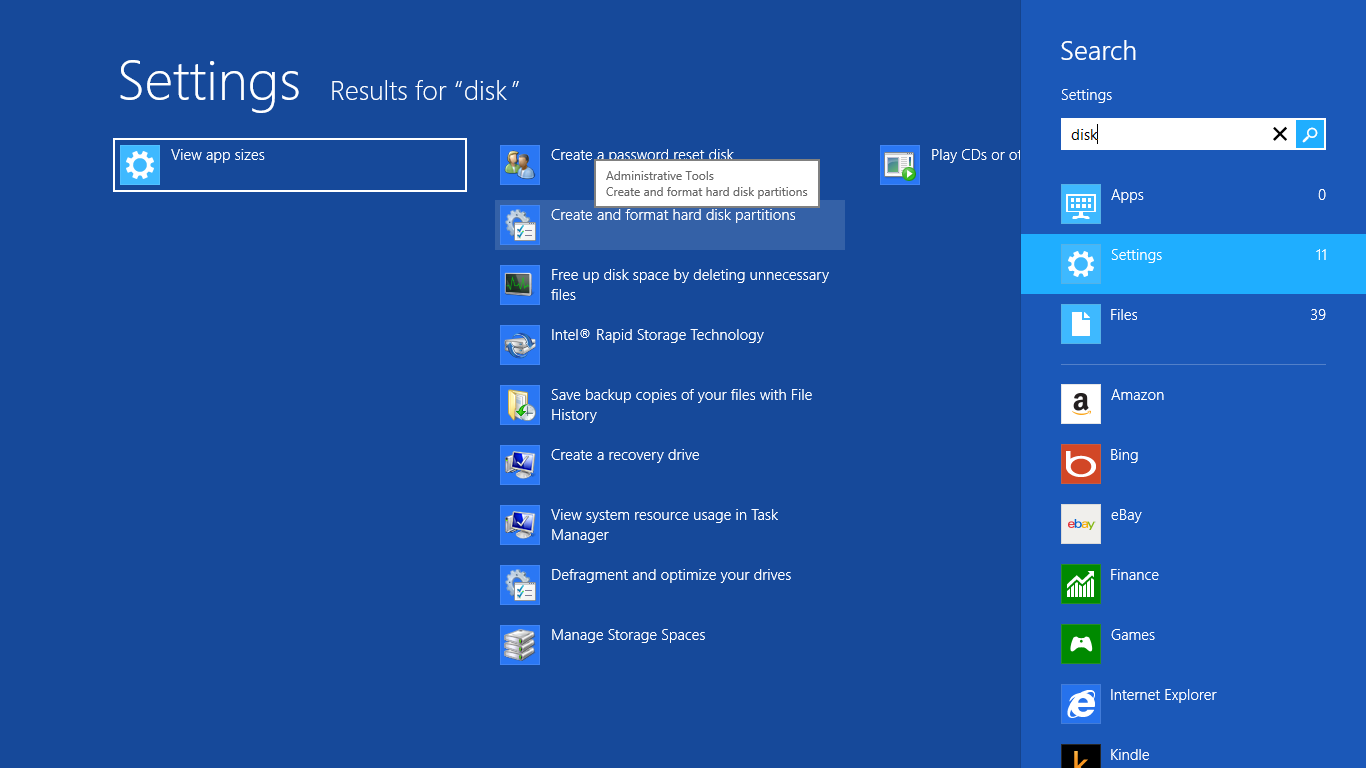
To be able to shrink the Windows partition y'all volition need to run the "Disk Management" tool. To do this motility your mouse to the pinnacle correct corner and click on the search icon. At present click the settings icon and showtime typing "disk".
Click on the option "Create and format hard disk partitions".

As y'all can see the Dell Inspiron by default has a busy looking deejay layout.
The operating arrangement is on bulldoze C and is chosen Bone.
This is the division that needs to exist shrunk in order to make space for Ubuntu.
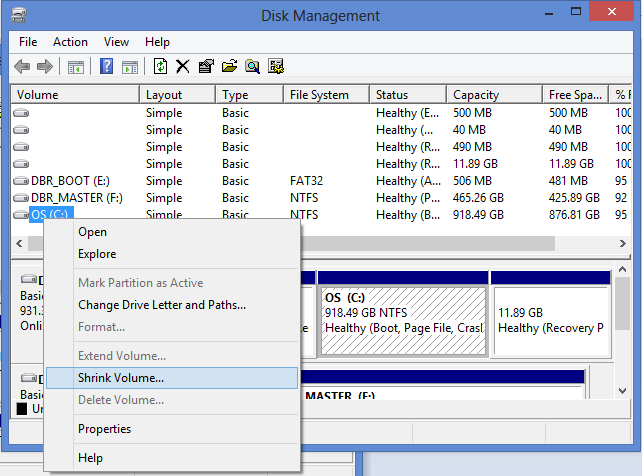
Right clicking on the relevant drive brings up a context menu and on that context menu is the option to "Shrink Volume".
When you click on "Compress Book" a box appears asking you how much disk space y'all want to shrink the deejay by.
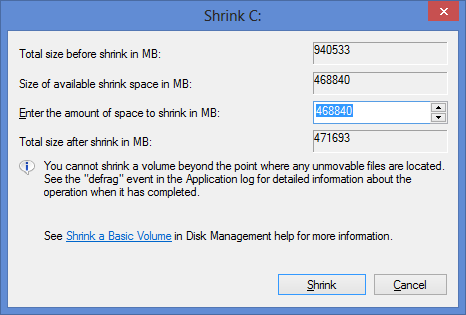
The Shrink utility helpfully sets upwards the amount of disk space that information technology tin comfortably spare.
Unless you have a reason to choose otherwise it is generally fine enough to accept the default options.
Click on "Shrink" to beginning the process.
Unlike the backup process this fleck is quite quick.
3. Create a bootable USB drive with Ubuntu on it
Download Ubuntu
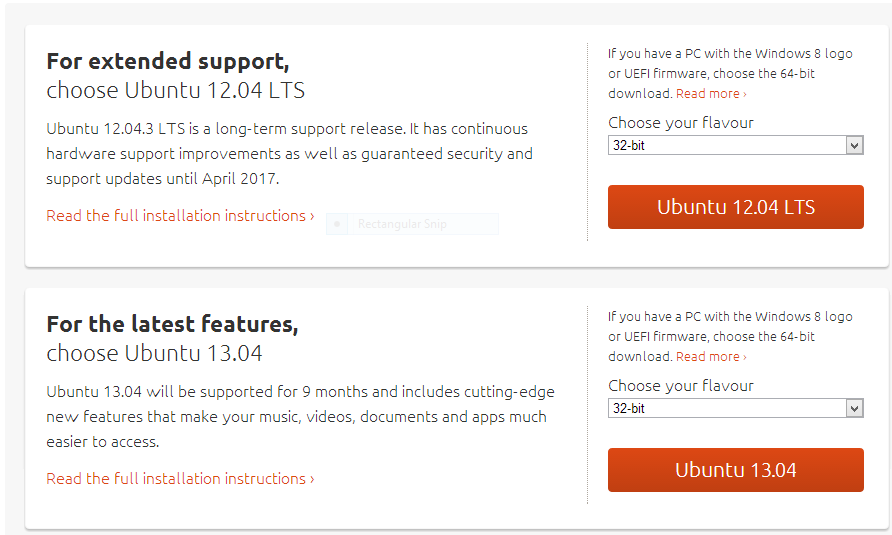
Every bit you tin see there are two versions available.
Version 12.04 is a long term back up release which means you tin install it now and it will notwithstanding receive updates in 4 years time. This is dandy if you are the sort of person who likes stability and you aren't besides bothered about getting the new features early.
Version 13.04 has merely ix months worth of support and so you will be expected to upgrade to a newer version of Ubuntu. This may audio like a very curt menstruum of fourth dimension (and it is) merely 13.04 already feels slick compared to 12.04.
If yous become comfortable with the installation process then moving up to the latest versions keeps you lot in the at present lodge.
The long term support releases are groovy but consider that the last LTS version was back at version 10 which pre-dates Unity. To quote Ferris Bueller:
Life moves pretty fast. If you don't stop and look around in one case in a while, you could miss it.
The one thing you lot exercise have to practice though to be able to run Ubuntu alongside Windows 8 is to choose the 64-fleck version.
Annotation that if you lot have a Dell Inspiron 3521 and you wish to install version 12.04 there is a dedicated version particularly for you at http://www.ubuntu.com/certification/hardware/201208-11539/.
The Dell Inspiron 3521 can be purchased pre-installed with Ubuntu and therefore there is already an prototype bachelor which has all the necessary drivers set up.
I tin can confirm however that I installed Ubuntu 13.04 and I used the stock 64-chip download and I have had no problems with Ubuntu whatsoever.
If you live in the city then downloading Ubuntu will be a quick process. If you alive in the countryside and your internet connection sucks as much as mine then at that place is ever the option of .
Download Unetbootin
Unetbootin is the tool that I used to create a bootable USB bulldoze with Ubuntu on it. To download Unetbootin visit http://unetbootin.sourceforge.internet/.
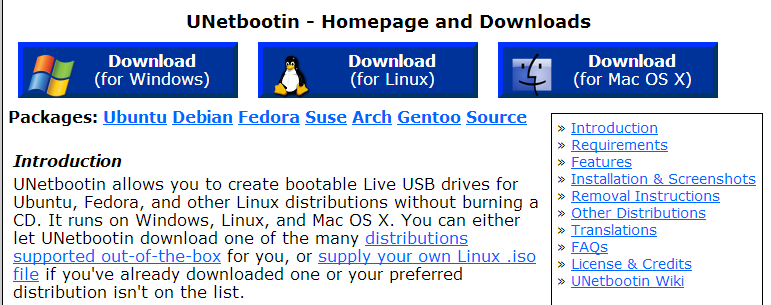
Click on the "Download (for Windows" link. The download is fairly small and even on my meagre cyberspace connection takes under a infinitesimal.
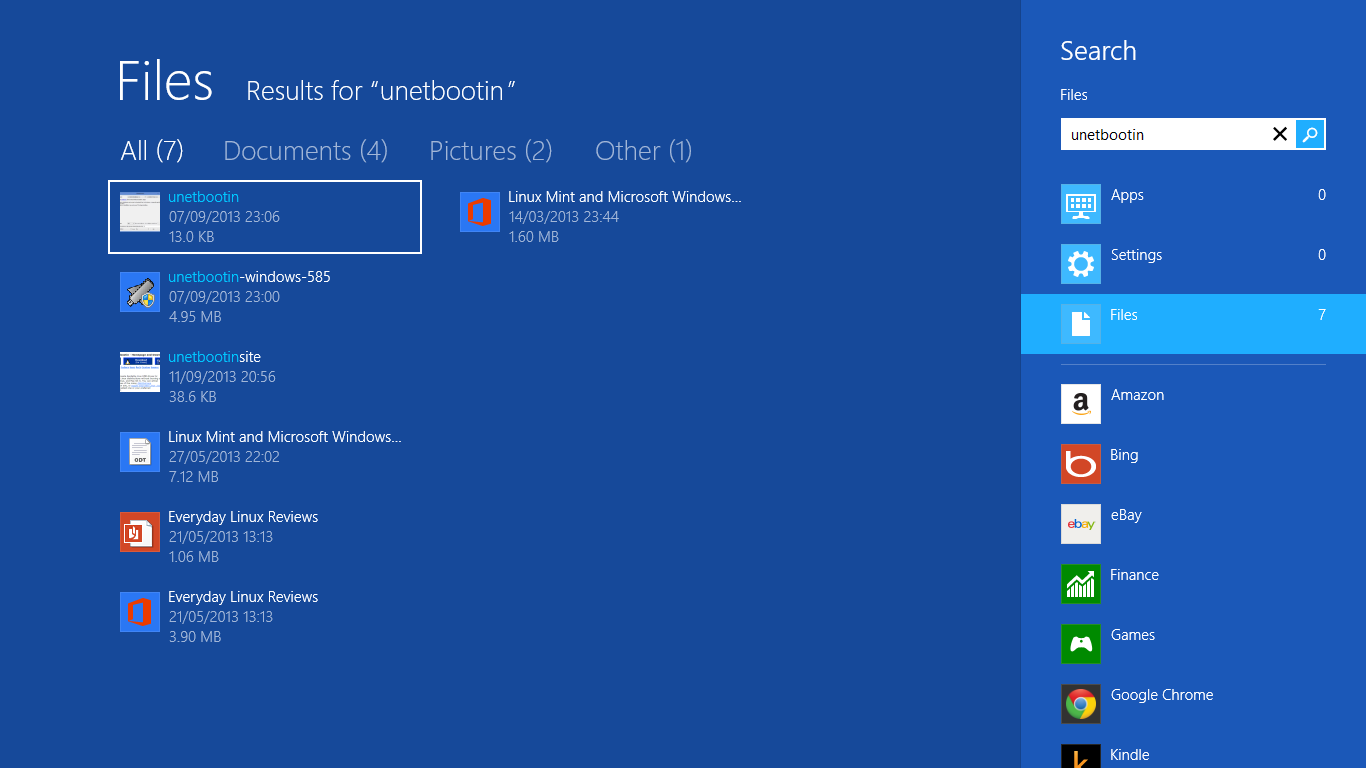
To run Unetbootin press the "Start" push and click on "Files". Now type "Unetbootin" into the search box and Unetbootin will be the get-go option. Click on the icon to run Unetbootin.
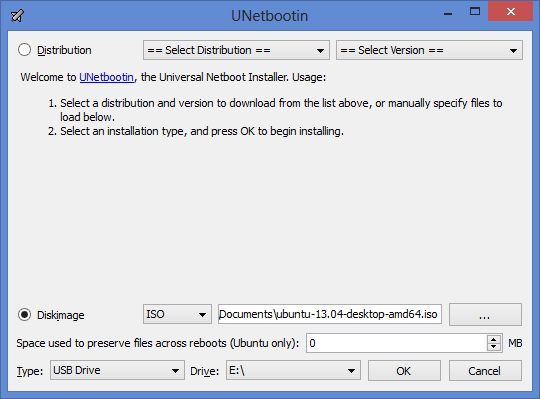
To create a bootable USB drive y'all need to insert a blank USB bulldoze into a USB port and so select the disk prototype option.
Clicking on the button with 3 dots brings up a file browser and yous should be able to observe the downloaded Ubuntu ISO.
Make sure that the USB Bulldoze is indeed in the drive letter of the alphabet specified and when you are happy that you lot aren't almost to install somewhere you shouldn't click OK.
It takes a few minutes for Unetbootin to do information technology's stuff but ultimately you will end upwards with a bootable USB drive.
4. Turn off fast boot and disable secure boot
Turn off fast boot
To plow off fast boot you need to go into the control panel and and so the power options.
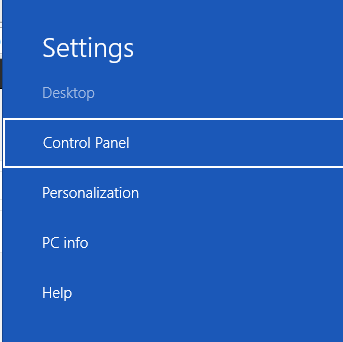
To open up the control panel move your mouse to the height right corner and and then click on the settings icon that appears.
When the carte appears click on the control panel.
From within the Control Console click on the "Ability Options" icon.
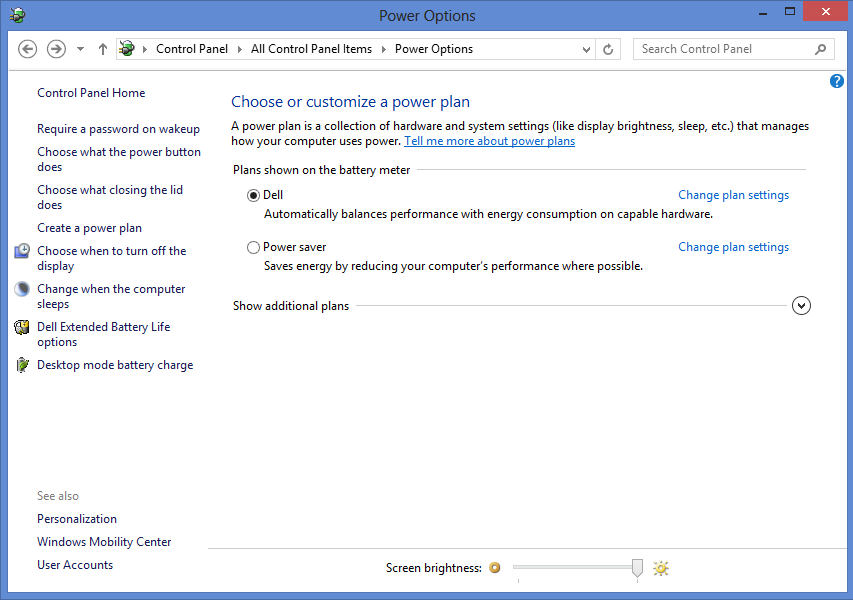
From the "Power Options" screen look down the carte on the left side and select "Cull what the ability button does".
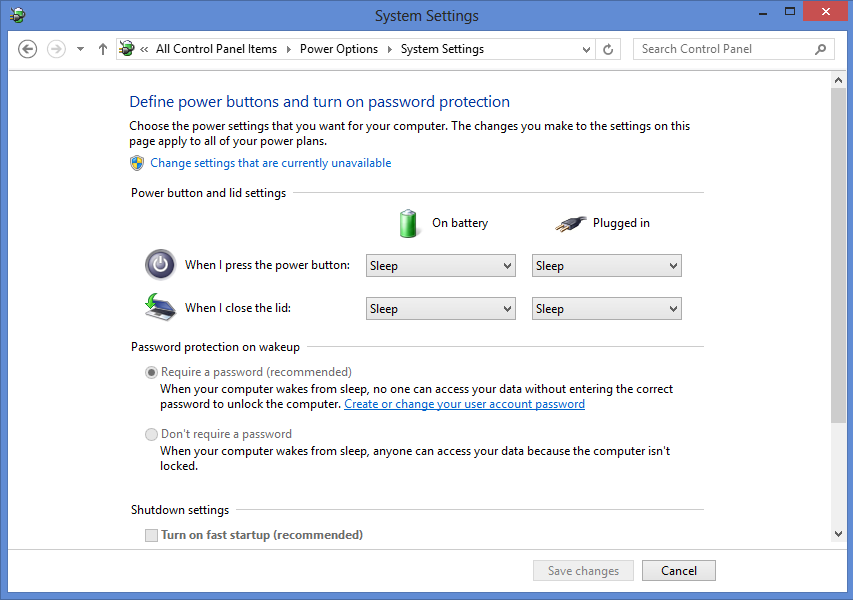
On the snappily titled "Define power buttons and turn on password protection" screen scroll downwards to the lesser.
There should exist an option that says "Plow on fast startup". If this option doesn't appear click on the link at the tiptop of the window that says "Change settings that are currently unavailable".
If the "Turn on fast startup" option is checked turn information technology off. I know that it says recommended but in this example it actually isn't recommended.
Click the "Save Changes" button to go along.
Turn off secure kick
To plough off secure boot motility your mouse to the top right corner and and then click the settings option.
Now comes the ninja flake. Agree down the shift primal and select "power" and "restart" whilst keeping the shift cardinal held downwards. (Take out the USB drive if information technology is still plugged in).
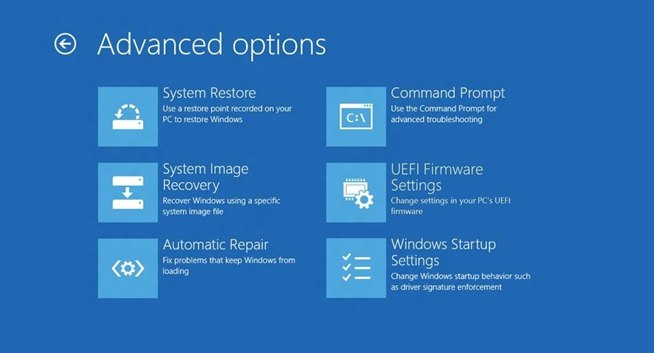
When you reboot a screen similar to the 1 higher up volition appear. The selection you should choose is the UEFI Firmware Settings.
At this point y'all will be taken into the UEFI settings for your brand of computer and I can't write instructions for each make and model therefore Google is your friend (and not at all evil). Type in your brand and model and search for UEFI settings.
When you are in the UEFI settings y'all are looking for the pick that says something like "Secure kicking" with the value set to "Enabled" and you want to fix that selection to "disabled".
five. Run the Ubuntu Installer
To load Ubuntu in alive fashion insert the USB drive created in step 3 and reboot your computer.
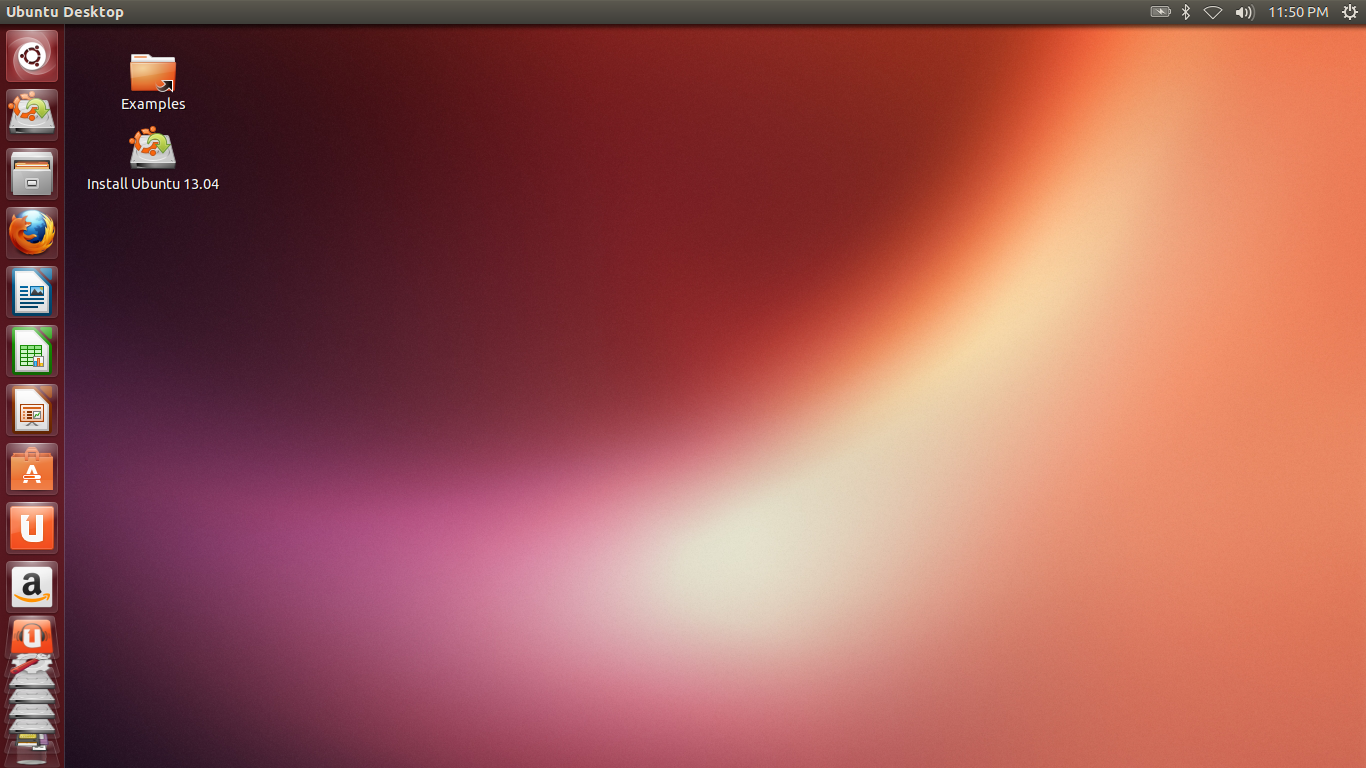
It is a cute sight seeing Windows disappear and Ubuntu appear in its place even if it is the live USB version.
Allow's get started.
Clicking on the "Install Ubuntu 13.04" (or 12.04 if you are going LTS) brings up the Ubuntu installer.
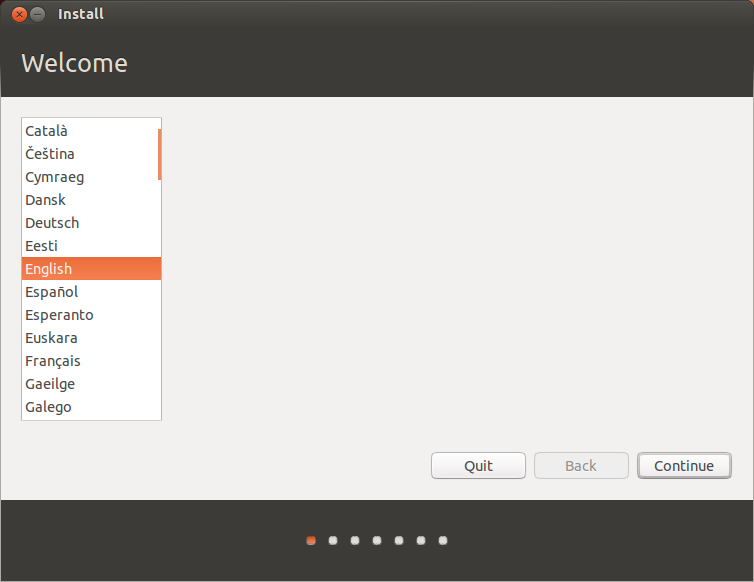
The first stride lets y'all choose the linguistic communication for the installer.
If you speak English I recommend choosing English (unless you feel you need an extra challenge) and indeed if yous aren't a native English speaker then choose the language you feel nearly comfy using.
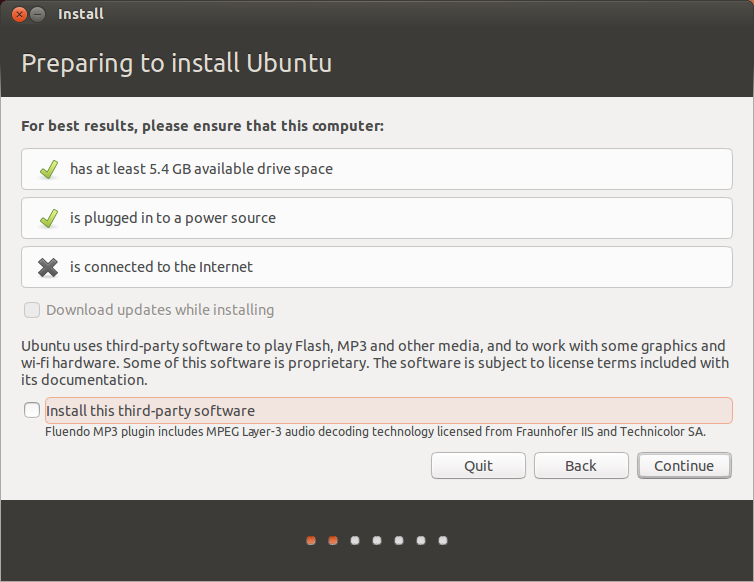
The preparation screen shows yous whether you lot are fully prepared for installing Ubuntu.
As you can see from the screen image I had plenties of disk space and I was fully plugged in to the power but I didn't accept an internet connection.
Having the internet connection set up lets you download updates on the go. I prefer to do it afterwards.
Y'all will also discover the "install this 3rd party software" checkbox which volition make Flash and MP3s piece of work directly abroad after the install.
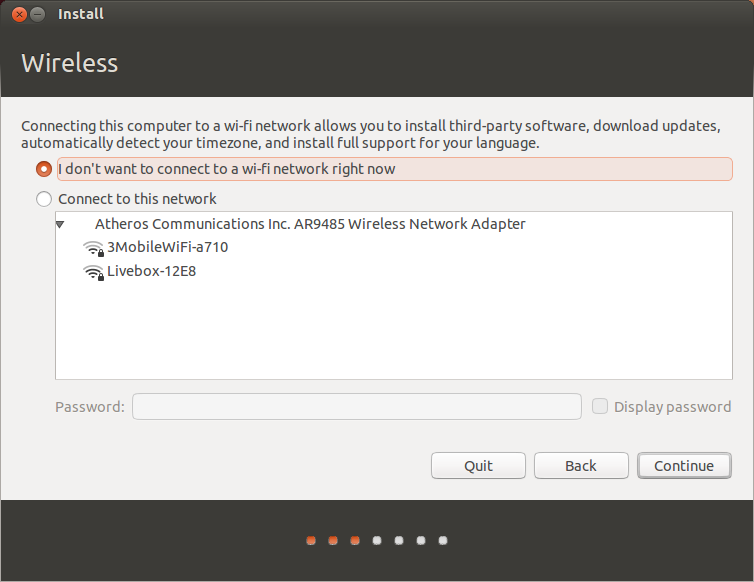
If you aren't already connected to the internet now is your chance to go connected.
Y'all can cull any one of your broadband connections.
I have ii available to me and neither of them are any good.
I adopt to install first and update afterwards so I get out the net disconnected.
vi. Partitioning the empty space
This flake is going to better your hard drive partitions and if yous didn't practise a backup at the kickoff this is the point of no return.
I highly recommend making sure you have created the correct recovery media before standing.
I could have made the install process one big step just the partitioning takes a fleck of explaining and then I put this in a carve up section.
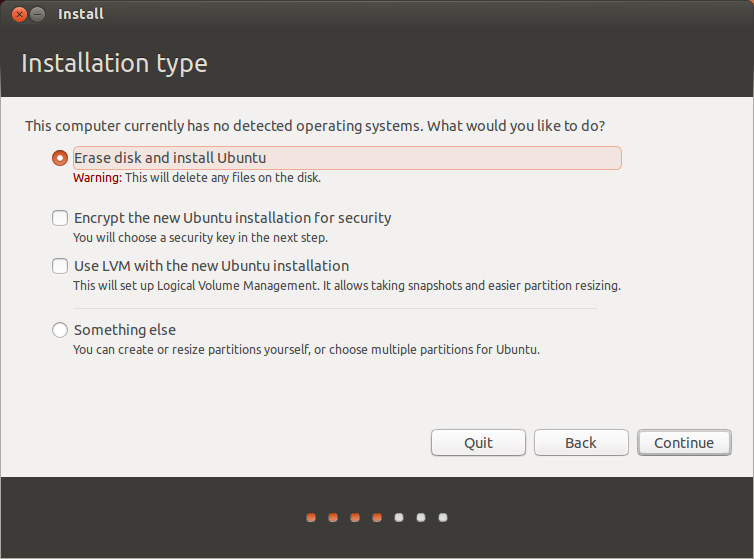
At that place are 2 options available to you from the division screen.
- Erase deejay and install Ubuntu
- Something else
If you just want to install Ubuntu and forget Windows e'er existed (and if you have tried Windows viii nobody is going to blame you for making this decision) you lot can only press continue .
This guide is about installing alongside Windows 8 and therefore to practise this choose "Something Else".
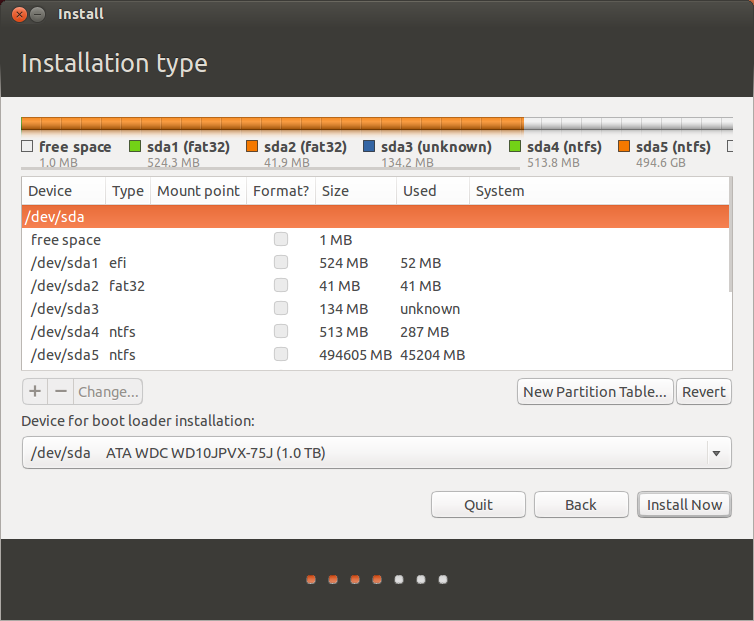
The deejay layout on the Dell Inspiron 3521 is quite involved.
What you should do is look for the large corporeality of unpartitioned space by scrolling down. (For the Dell it was /dev/sda7).
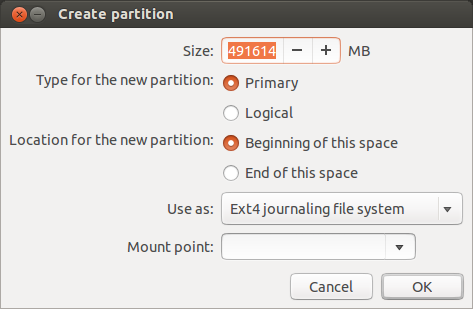
When you observe the unpartitioned space click on the plus symbol and create a logical sectionalization. Mount the division to / and set the size to 50 gigabytes. Set the partition type to EXT4.
Now find the unpartitioned space once again and click on the plus symbol and create another logical partition. Mountain this ane to /Abode and ready the blazon to EXT4. The size should be most all the unpartitioned infinite minus well-nigh 16 gigabytes.
There is a lot said near how much swap space you need just as disk space isn't exactly expensive anymore I always just choosing 16 gigabytes which is fashion more than than is actually required. (By quite some distance). Yous will therefore need to create a third division in the unpartitioned infinite and choose SWAP as the blazon.
When it comes to choosing where to install the bootloader don't change a thing. Go out it pointing to "/dev/sda". Whatever y'all practice don't choose one of the other partitions like "/dev/sda1" or "/dev/sda2" etc. This is one of the most common mistakes people make.
For the / and Home partitions that y'all only created make sure the format checkbox is checked. You cannot format the swap segmentation.
Do not continue unless yous are really satisfied that you have washed everything correctly and that yous accept a backup available in case of bad times.
Press Install to continue.
7. Complete the installation
The installation will at present go along and you will meet files copied beyond and the installation taking identify.
At this point you will be able to choose keyboard layouts, timezone and you lot will exist asked to add a new user.
At the terminate of the install process you volition asked if you want to restart the system or continue using the live version.
8. Reboot into the live image
At this bespeak information technology is worth rebooting the computer to see what has happened.
When the computer has started to reboot remove the USB bulldoze and let the bootup procedure begin every bit normal.
If you are lucky everything has worked perfectly well and you accept a Grub menu showing options for Windows and Ubuntu.
The reality is that you will be very lucky if that really has happened.
One of three things volition have happened:
- Ubuntu volition take loaded
- Windows volition have loaded
- Naught loads
If either Ubuntu or Windows loads and then you lot just have a bootloader issue, if nothing loads it is likely that y'all didn't plow off secure boot and probably accept letters on the screen saying so.
Unless you have a perfectly running dual boot system plug your USB drive back in and reboot so that the live version of Ubuntu runs once more.
ix. Run the boot repair
For the next office you will venture into the final. Press the super cardinal on your keyboard (that is the one that looks similar the Windows icon).
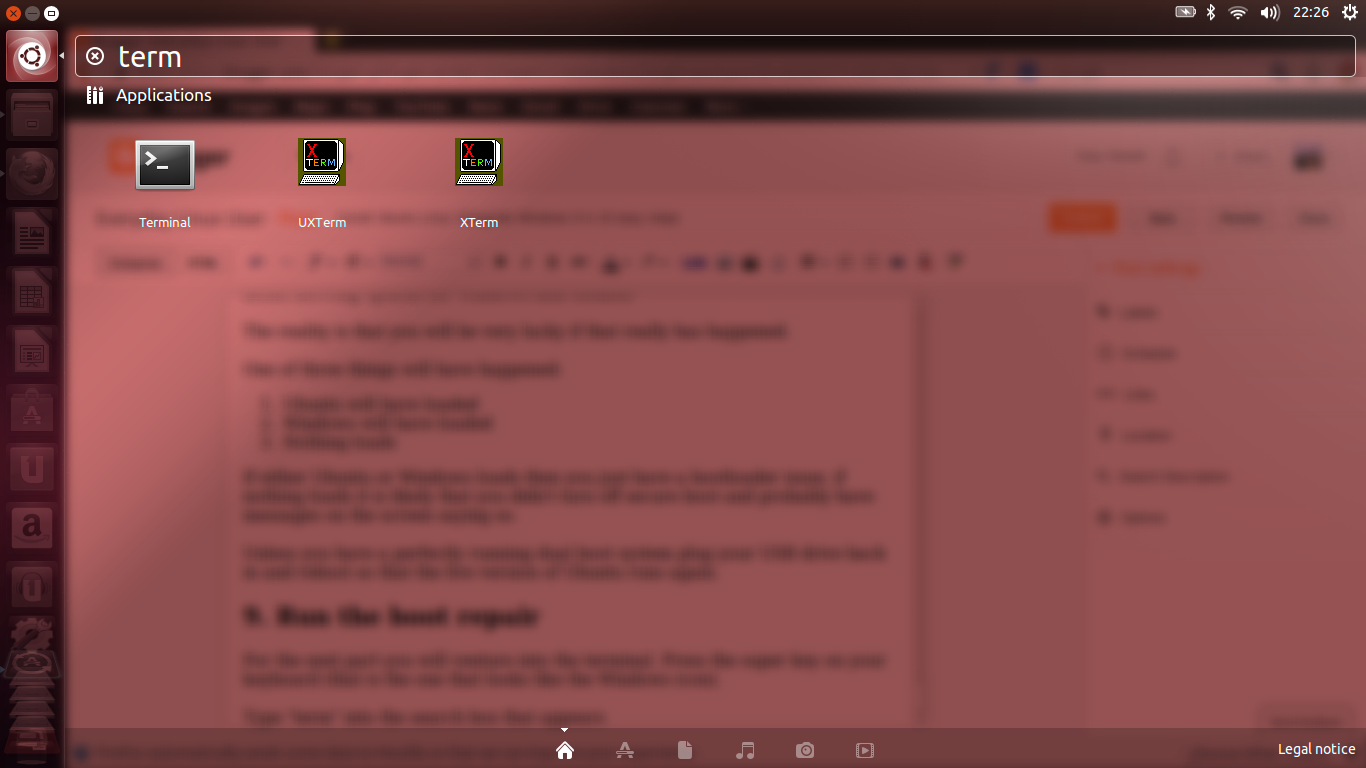
Type "term" into the search box that appears. Click on the "Terminal" icon.
From within the concluding window type the following:
sudo add-apt-repository ppa:yannubuntu/boot-repair && sudo apt-go update
The above command adds a special repository to your Ubuntu live system and and so the update command downloads a listing of all the applications that reside in that repository.
Now all you have to practise is blazon:
sudo apt-become install -y boot-repair && (boot-repair &)
The information I am providing here comes direct from the following page: https://help.ubuntu.com/customs/Kicking-Repair (Just in case you thought I was making all this up as I went forth).
A message will announced proverb that boot repair is scanning your partitions.
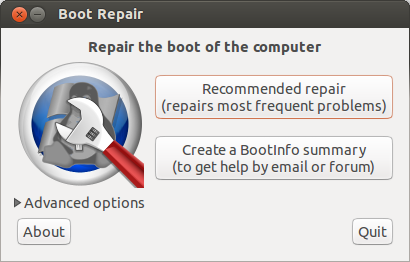
At this point I clicked the "Recommended repair" button as it does say it fixes the most frequent problems.
Afterward a few minutes the application will tell you lot if it needs you to run extra commands in the terminal and it gives you lot the commands to copy and paste.
By following the instructions provided my kick loader was fixed and I could move on to the final stride.
ten. Exam that everything works
Reboot your computer and remove the USB drive.
You lot should now accept a menu with various options on it. The get-go one volition be Ubuntu and somewhere down the listing is Windows EFI.
Try Ubuntu and make sure that it loads correctly, then reboot and endeavour the Windows EFI option. Windows 8 should now load.
Troubleshooting
This article has been upwards for a number of months at present and in that location have been a large number of comments added. Some of the comments provide nuggets of information that will be useful to others.
Click here for 9 tips for troubleshooting Windows eight and Ubuntu.
If either Windows or Ubuntu won't load or nothing loads at all information technology is worth checking over the to a higher place steps to make sure you turned off fast boot and secure kick.
If yous call back you have done everything correctly then re-create any errors and load the Alive USB version of Ubuntu again.
Now Google is once more your friend (and not at all evil). Search for the error text that you lot received or go to the Ubuntu forums and search there for your error.
If that fails to aid you can either enquire for help yourself at the Ubuntu forums or on the Ubuntu sub-reddit.
Another option is to open XChat by pressing the super key and typing XChat. At present notice the Ubuntu IRC chatroom and state your bug inside the realms of IRC chat. There are always helpful people there.
simply ..... if all else however fails .... remember those backups I mentioned throughout this article. It is time to call up about using them.
You can always restore Windows to it's original country and try following the instructions once again.
Summary
I hope this article helps some of y'all install Ubuntu alongside Windows.
Information technology volition probably take you less time to install Ubuntu than it has to read the commodity down to this far.
Don't be afraid. Give information technology a become. Yous volition be glad you did. Let'south face it. Windows 8 sucks.
Thankyou for reading.

To make information technology easier for anybody who wants to read my Ubuntu based manufactures and tutorials I take formatted them, rewritten them and added actress content which has resulted in the eBook "From Windows To Ubuntu".
The book isn't massive like a SAMS guide so it isn't going to take you forever to read information technology but there is certainly a lot of content.

Everybody is talking about Ubuntu 13.10
Source: https://www.everydaylinuxuser.com/2013/09/install-ubuntu-linux-alongside-windows.html
Posted by: abrahamtopas1947.blogspot.com
0 Response to "How To Install Linux On Windows 8.1"
Post a Comment